
Please be advised that SGS College will be closed from Friday 19 December, until Tuesday 6 January 2026.
We wish you a very happy and safe Christmas break.

New for 2027*

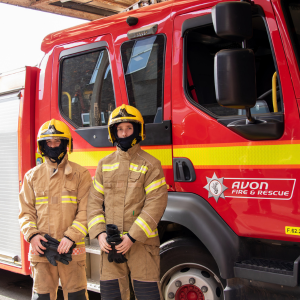
PUBLIC SERVICES (UNIFORMED)

Advance Your Career with a HNC/D Public Services

Did you know the UK public sector now employs over 6 million people across health, education, emergency services, local and central government, making it one of the country’s largest and most diverse employers? Latest Government figures show public sector employment reached an estimated 6.18 million in late 2025 (Office for National Statistics 2025), continuing steady growth and offering strong career prospects across multiple fields.

Why Choose This Course?

The HNC/D in Public Services at SGS College is designed to prepare you for a wide range of exciting and rewarding careers within both uniformed and non-uniformed public service roles. Successful completion gives you the skills, knowledge and real-world experience employers are actively looking for, whether you’re aiming for frontline positions, administrative roles, or specialist support functions.

This qualification is ideal if you’re interested in careers such as:

·        Emergency services (police, fire, ambulance)

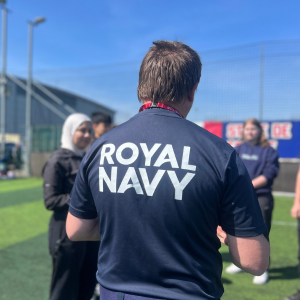
·        Armed forces and defence

·        Prison and probation services

·        Youth work and social care

·        Local and central government roles

This course provides a broad foundation in public service principles, including:

·        Operational skills and leadership

·        Criminology

·        Law, ethics and community engagement

·        Blue Light public service organisations and structures

·        Personal development and fitness for duty

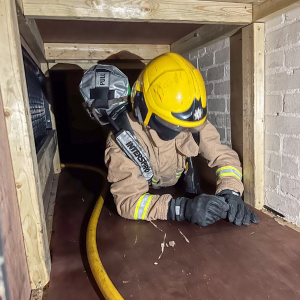
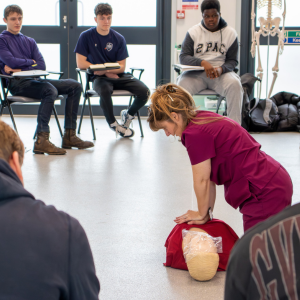
·        Work placements and hands-on experience

Real Experience, Real Progress

During the course you’ll have opportunities for work experience placements, helping you to build professional networks, apply your learning in real contexts, and enhance your CV, giving you a competitive edge in the job market. At SGS College, this course is designed to help you build the skills and confidence that employers are looking for.

You will be taught over 2.5 days each week, allowing you the flexibility to volunteer or continue part-time work alongside your studies.

* Subject to approval
No items found.
Study Modules
PS401
Exploring Public Services
keyboard_arrow_down

Public services play a fundamental role in safeguarding individuals, communities and national security. These services include various sectors such as blue light emergency services (police, fire and rescue, ambulance service), coastguard, mountain rescue, the military (army, navy, air force, marines, territorial forces), security and welfare agencies (criminal justice services, courts, prisons, probation, NHS, Revenue and Customs, Border Forces), and government bodies (central, regional, and local). Supporting these essential services are charities, social enterprises and voluntary organisations, often referred to as the third sector and the private sector. This unit provides an in-depth understanding of the structures, roles, responsibilities and funding models of the public services. The unit also explores the performance targets, accountability mechanisms and quality control measures used to assess the effectiveness of public services. You will learn how public services collaborate, external and internal impacts on performance, how they are held accountable and how they deliver high-quality services to meet the needs of diverse service users. The unit also examines emerging threats and future challenges, from technological advancements to climate change, and how these factors will shape the future operations of public services. On successful completion of the unit, you will understand how different public services operate, how they are funded, how they support their workforce and service users, how they remain accountable through performance measures and what services they are able to offer, and the changing needs of society. This knowledge is essential for anyone looking to pursue a career in public services, especially in roles that require inter-agency collaboration, strategic management and adaptability to future challenges, such as Despatch Controller, General Manager, Project Manager, Operational Manager and Communications Officer.

PS402
Mental Health adn Wellbeing
keyboard_arrow_down

Mental health and wellbeing are critical components for professionals working in public services such as police, fire and rescue, and emergency services; they can be more at risk of suffering from poor mental health and wellbeing. These roles can involve high levels of stress, physical exhaustion and exposure to traumatic events. Workers can be less likely to seek support, which can lead t them to contemplate leaving their job or suffer from poor mental health and wellbeing. This unit is designed to provide you with a comprehensive understanding of both mental and physical issues pertinent to these demanding careers. The unit will equip you with skills and knowledge that will help them maintain your own health and wellbeing. The unit will also help you to support your colleagues and make them aware of the sources of support available. The primary aim of this unit is to explore the various aspects of mental health and wellbeing that are crucial for individuals in the public services. You will investigate mental health topics such as stress management, coping mechanisms and resilience. You will study physical health subjects related to mental health, including fitness and nutrition. By integrating these two dimensions of health, you will be prepared to face the unique challenges inherent in public services, fostering a holistic approach to personal and professional wellbeing. You will address strategies that can be used to promote positive mental health and wellbeing for individuals, families and communities. Each topic is designed to build on the previous one, providing a cohesive and progressive learning experience. On successful completion of this unit, you will have developed a robust set of skills related to mental health and wellbeing in public services and will have also developed your independent and collaborative research skills. You will be able to identify and address mental health issues, implement effective stress management strategies and maintain physical fitness. These skills are directly linked to employment opportunities in public services, providing you with a competitive edge and ensuring you are well prepared to support both your own and your colleagues’ mental health and wellbeing.

PS403
Equality, Diversity, Inclusion and Ethics
keyboard_arrow_down

The public services sector plays a crucial role in upholding the values of equality, diversity, inclusion and ethics. Whether in emergency services, government, security, or welfare services, promoting fairness and ethical behaviour is essential in serving diverse communities and fostering trust. This unit aims to equip you with a deep understanding of how legislation, organisational policies and ethical considerations work together to support equality, fair treatment and ethical decision making within public services. In addition to focusing on equality, diversity and inclusion (EDI), this unit introduces the concept of ethics, encouraging you to explore the moral principles that guide behaviour in public service roles. You will critically examine the relationship between ethics, EDI and public service operations, understanding how values shape the actions and decisions of professionals. On completion of this unit, you will have obtained a thorough understanding of the legislation that is currently relevant to EDI considerations today. By looking practically at EDI policies used in public services, you will gain an appreciation of the requirements of what needs to go into a modern EDI policy. In designing their own EDI policy for a public service, you will have the chance to apply the theoretical and legislative knowledge of EDI considerations. This unit will equip you for a role within public services, such as Human Resources Manager, Counsellor, Policy Advisor and EDI Officer.

PS404
Planning a Public Services Project
keyboard_arrow_down

This unit is assessed through a Pearson-set assignment. The project brief will be set by SGS College, based on a theme provided by Pearson (this will change annually). The theme and chosen project within the theme will enable you to explore and examine a relevant and topical aspect of public services in the context of a professional environment. The research process is a fundamental aspect of developing effective public services projects. Understanding the various methodologies, tools and techniques involved in research allows public service professionals to create informed, data-driven solutions to complex issues. This unit is designed to provide you with a comprehensive understanding of the research process, from the initial stages of project planning to the presentation of findings. By exploring different research methodologies and their applications, you will be equipped to develop and present solutions that address specific public services project briefs. The aim of this unit is to give you an opportunity to demonstrate the research skills required for developing a deeper understanding of public services and the ability to use data and evidence to inform decisions. You will undertake independent research and investigation of a theme set by Pearson. Based on these findings, you will use the outcomes to provide solutions to a public services brief that will then be presented with justifications. On successful completion of this unit, you will have the confidence to engage in decision making, problem solving, research activities and project-planning tasks. You will have the fundamental knowledge and skills that will enable you to investigate and analyse public services concepts, and engage with stakeholders in a work-related, professional context to determine appropriate outcomes and solutions.

PS413
Terrorism and Counterterrorism
keyboard_arrow_down

Terrorism and counterterrorism have been a phenomenon for hundreds of years. However, engagement with and study of terrorism and counterterrorism increased drastically in the wake of a series of major international terrorism-related incidents since 2001. Now, with the development of the 24-hour news cycle, social media and high-profile attacks, terrorism has become a major part of contemporary society. The aim of this unit is to give you a thorough understanding of terrorism and counterterrorism strategies. You will explore various forms of terrorism, their underlying causes and their global and local impact. You will also examine counterterrorism measures, including intelligence gathering, crisis management, policy making and international cooperation. This unit covers a broad spectrum of topics critical for the understanding of terrorism and counterterrorism. Areas of study include the history and evolution of terrorism, the diverse types of terrorist organisations, the socio-economic and political factors driving terrorism, and the legal and ethical dimensions of counterterrorism strategies. On successful completion of this unit, you will have developed analytical, strategic and ethical skills in the context of terrorism and counterterrorism. You will be able to assess and critically evaluate counterterrorism strategies and understand the legal and ethical challenges involved in counterterrorism operations. These skills are linked to employment opportunities in law enforcement, intelligence services and policy making, providing you with a competitive edge in the field of protective public services.

PS417
Fitness Preparation and Testing
keyboard_arrow_down

Physical fitness is crucial for ensuring that personnel can meet the demands of their role, which often involve high-stress situations requiring physical endurance, strength and agility. Many uniformed services require a level of physical fitness, for example the fire service and the military. As public service professionals face unique challenges, such as emergency response and community safety, understanding fitness preparation and testing becomes essential. The objective of this unit is to give you the knowledge and skills necessary for conducting fitness assessments and developing fitness preparation programmes. You will be introduced to a range of fitness topics, including the components of fitness required for protective services, various fitness assessment methods, the importance of physical training programmes and the principles of designing effective fitness sessions. You will design and deliver a fitness training programme for an identified public service, where you will be able to select appropriate fitness tests to ensure effective programme delivery to meet identified objectives. You will look at the range of data produced by the fitness tests and some key methods for data analysis. On successful completion of the unit, you will be proficient in conducting fitness assessments, interpreting fitness data and designing training programmes that meet the specific needs of protective public service personnel. The knowledge and skills gained in this unit can lead to job roles that require high levels of fitness, including police firearms officers, physical training instructors and royal marines.

PS418
Outdoor Skills Development
keyboard_arrow_down

The ability to learn new skills and operate in a challenging environment is something that serves well in all public service job roles. Also, being able to manage risk and understand the decision-making process is crucial when working in potentially challenging and high-pressure situations. You will develop practical skills in a range of outdoor and adventurous activities while examining the role that risk management and decision making have on the leadership of a successful outdoor session. Combining theoretical knowledge and practical skills, you will plan and deliver a safe and engaging outdoor session using appropriate leadership and group management strategies. You will then explore the theory of skill acquisition in the outdoor environment and plan for personal skill development and acquisition. On completion of this unit, you will have gained the practical skills to participate in a variety of land or water based outdoor adventurous activities; you will also be able to plan and lead a session in an outdoor environment. You will be able to select a leadership style and use group management techniques appropriately as well as manage risk and make clear and sound decisions.

PS420
Technology in Public Services
keyboard_arrow_down

In the 21st century, modern public services rely heavily on advanced technological solutions to enhance their efficiency and effectiveness. UK governments have invested heavily in the design and implementation of technology projects for specific public service organisations as there is no doubt that modern technology can support effective public service delivery. From emergency response systems to predictive analytics in crime prevention, technology plays a critical role in safeguarding the public. This unit gives you the opportunity to delve into the various elements of technology, considering predictive analytics and crime-prevention models. You will explore the ways in which technology supports organisations, their suppliers and their customers and enhances the delivery of public services in the UK. You will gain a greater understanding of how the technology in public services safeguards the public with surveillance and cybersecurity software. On completion of this unit, students will have developed a robust set of skills related to the integration and use of technology in public services. You will be able to evaluate the benefits and limitations of various technological tools. The unit will equip you with the knowledge needed to leverage technology in real-world scenarios. This unit is essential for you if pursuing careers in public safety, such as Cyber Engineer, Intelligence Operative and Military Signaller.

Course Video
*This programme is subject to validation and delivery approval by the University of Gloucestershire.
APPLICATIONS FOR SEPT 2026 ENTRY ARE NOW CLOSED FOR THIS COURSE.APPLY VIA UCAS FOR FULL-TIME STUDY
(FULL-TIME)
APPLY ONLINE FOR FULL-TIME STUDY
(FULL-TIME)
APPLY ONLINE FOR PART-TIME STUDY
(PART-TIME ONLY)
SGS Level 3 Guarantee Offer Scheme
Campus:
University Centre WISE
Level:
Higher National Diploma
Full-time Duration:
2 Year
Full-time Fee (Per Year):
£8500
Part-time Duration:
4 Years
Part-time Fee (Per Year):
£4250
UCAS Application Code:
UCAS Entry Tariff:
48
Lifelong Learning Entitlement Credits: 120 Full-time / 60 Part-time (Total Credit Value)
Entry Requirements

The minimum UCAS tariff entry points from a level 3 qualification, GCSE Maths and English at grade C/4. Once your application has been reviewed, you may be invited for an interview. Mature students over 21 without the relevant qualifications will be required to demonstrate previous experience and evidence of academic ability.

Course info last updated:
September 21, 2026
Full-Time
Part-Time
Delivery Format

The delivery format for your degree-level programs is primarily face-to-face and in-person sessions. However, there may be some hybrid sessions offered occasionally, mainly for flexibility purposes, such as tutorials or for larger events like visiting lecturers. Additionally, it's mentioned that all degree programs are well-supported by Virtual Learning Environments, which include Teams or Google Classroom.

Additional Cost Information

No items found.
Similar Courses
No items found.